Yes. You can get sponsored well before 50K subscribers. I did more than 20+ Sponsored Videos where as i published 65 videos as of now on my Youtube Channel.
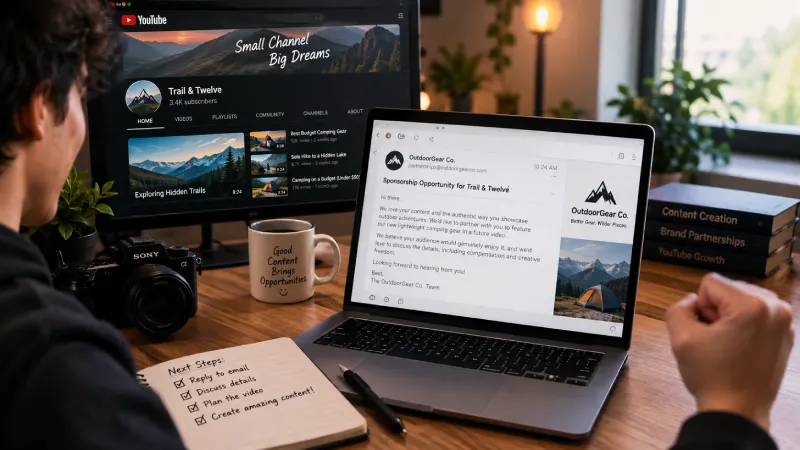
For a small U.S.-focused channel, brands care less about subscriber count than whether you have a specific audience, consistent views, and a believable reason their product belongs in your videos.
One important 2026 update: YouTube’s Creator Partnerships is the current umbrella for the old BrandConnect tools.
In the U.S., eligible creators can be discovered by brands once they’re 18+, in YPP.
The realistic 0 → 50K roadmap
Think of it as 5 stages, not “get 50K subscribers and then sponsors.”
| Stage | Subscribers | Main objective | Sponsorship goal |
|---|---|---|---|
| 1 | 0–1K | Find your content-market fit | Free product / affiliate |
| 2 | 1K–5K | Prove repeatable views | $100–$500 deals |
| 3 | 5K–10K | Build a recognizable audience | $300–$1,000+ |
| 4 | 10K–25K | Become commercially useful | $750–$2,500+ |
| 5 | 25K–50K | Build a creator business | $1,500–$5,000+ |
Your average views, niche, audience demographics, conversion ability, deliverables and usage rights can change the number dramatically.
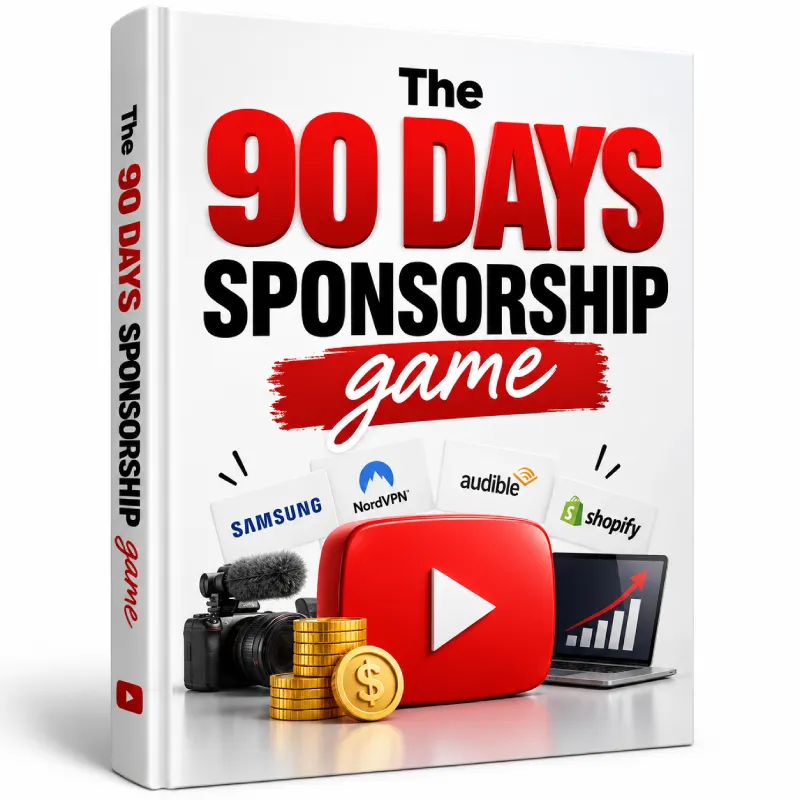
The 90 Days
Sponsorship Game
A practical guide for small YouTube creators who want to understand sponsorships, approach brands, and build a simple 90-day sponsorship strategy.
One-time purchase · Digital ebook
Get The Ebook for $4 →Built for creators ready to take sponsorships seriously.
Stage 1 — 0 → 1,000
Don’t chase sponsors yet.
Your job is to answer:
“Why would a specific type of person subscribe to me instead of another creator?”
Pick a niche with commercial intent.
For example:
Weak positioning
“I make lifestyle videos.”
Better
“I test affordable tech for college students.”
Better
“I help normal Americans build a home gym under $1,000.”
Better
“I test AI tools that save small businesses time.”
The last three give a brand an obvious reason to pay you.
Your first 30 videos
I’d structure them roughly:
- 10 searchable/problem-solving videos
- 10 highly clickable curiosity videos
- 5 product/comparison videos
- 5 experiments/challenges
Don’t obsess over subscriber count.
Watch:
CTR → retention → average views → returning viewers.
If one topic gets 3× the views of everything else, make another version of it.
Stage 2 — 1K → 5K
This is where you can start making your channel sponsor-ready.
You don’t need to wait for YouTube to send you opportunities.
Create:
1. Business email
Something like:
yourchannel@gmail.com
Better eventually:
hello@yourchannel.com
Put it in:
- About page
- Video descriptions
- Instagram/TikTok bio
- Link-in-bio page
2. One-page media kit
Include:
YOUR CHANNEL
Helping [specific audience] discover/test/learn [specific thing].
Then:
- Subscribers
- Average views
- Average views on last 10 videos
- Audience geography
- Age/gender if relevant
- Top videos
- Engagement
- Other platforms
- Contact information
Don’t make your media kit look like a résumé.
Make it look like:
“Here’s why my audience is valuable to your brand.”
Stage 3 — 5K → 10K
Now I’d actively start outbound sponsorship.
This is where most small creators make a mistake.
They email:
“Hi, I have 7,000 subscribers. Would you sponsor me?”
Instead:
“I noticed your company sells X. My audience is primarily Y, and I’ve recently made several videos around Z. I think your product fits naturally into that content.”
You’re selling audience + content + distribution, not subscribers.
Build a list of 100 brands
For example, if you’re a tech creator:
- keyboards
- monitors
- microphones
- VPNs
- productivity software
- AI tools
- laptop accessories
- desk products
- cloud software
- creator tools
Don’t target Apple first.
Target companies where a $500–$2,000 creator campaign is economically realistic.
The sponsorship funnel
This is the system I’d actually use:
100 brands researched
↓
50 personalized emails
↓
10 responses
↓
3 conversations
↓
1–2 deals
Your numbers will vary massively, but this gives you a realistic mental model. And don’t send 100 identical emails. Send 10 excellent emails per week.
Your first sponsorship doesn’t need to be expensive
At 2K–5K subscribers, a realistic first deal might be:
Brand gives you product + $200
You create:
- 60–90 second integration
- link in description
- pinned comment
- disclosure
Then you get a result. Now your pitch becomes:
“I’ve previously worked with X and generated Y views.”
That’s 10× more valuable than:
“I have 4,000 subscribers.”
Stage 4 — 10K → 25K
Now stop thinking like a YouTuber who occasionally gets sponsors. Start thinking like a media business.
You should have:
A sponsorship menu
For example:
YouTube integration
- 60–90 sec
- $X
Dedicated YouTube video
- $X
Short
- $X
YouTube + Short bundle
- $X
YouTube + Instagram
- $X
Usage rights
- additional fee
Exclusivity
- additional fee
The important part:
Don’t give away usage rights for free.
If a company says:
“Can we run your video as an ad for 6 months?”
That’s not simply the same sponsorship anymore. They’re buying advertising rights. Charge separately.
Stage 5 — 25K → 50K
At this point your biggest asset isn’t 50K subscribers.
It’s:
consistent access to a valuable audience.
Imagine two channels:
| Metric | Channel A | Channel B |
|---|---|---|
| Subscribers | 50,000 | 18,000 |
| Avg. views/video | 12,000 | 15,000 |
| Audience | General entertainment | 80% U.S. audience |
| Buyer demographic | Broad | Specific |
| Product recommendations | — | Strong |
| Advertiser appeal | Broad | Potentially very high for relevant advertisers |
The U.S. creator advantage
If your goal is specifically U.S. sponsorships, build the audience intentionally. You want your analytics to eventually say something like:
🇺🇸 United States — 72%
🇨🇦 Canada — 6%
🇬🇧 UK — 5%
rather than having an accidental audience scattered across dozens of countries.
That means:
- American terminology
- U.S.-relevant problems
- U.S. products
- U.S. pricing
- U.S. locations where appropriate
- U.S. cultural references
- U.S. search demand
But don’t fake being American.
If you’re actually creating from elsewhere while targeting Americans, that’s fine. Build an American audience through the content rather than pretending to be a U.S. resident.
When should you apply for YPP?
YouTube currently has an expanded YPP entry point at 500 subscribers + 3 public uploads in 90 days + either 3,000 public watch hours in 12 months or 3M Shorts views in 90 days. Full ad-revenue eligibility is currently 1,000 subscribers + 4,000 qualified watch hours, or 10M qualified Shorts views.
There is an important upcoming change: YouTube says that from February 1, 2027, new YPP applicants will need 1,000 subscribers plus 8,000 qualified watch hours or 20M qualified Shorts views for the ads/Premium tier. Creator Partnerships and Shopping thresholds aren’t changing under that update.
For sponsorships, however, don’t wait for 1,000 subscribers to start building relationships with brands.
Your actual 12-month game plan
If I were starting a U.S.-focused channel from zero, I’d do this:
Months 1–2
Goal: 0 → 500
- 2 long-form videos/week
- 3–5 Shorts/week
- Test 3–5 content angles
- Study analytics every week
- No expensive equipment
- Build recognizable thumbnail/title style
Months 3–4
Goal: 500 → 2K
- Find your top 2 content pillars.
- Start affiliate links.
- Create business email.
- Create media kit.
- Start mentioning products naturally.
Months 5–7
Goal: 2K → 5K
Start contacting brands.
10–20 targeted pitches/week.
Target smaller companies. Take a few strategically useful deals rather than accepting everything.
Months 8–10
Goal: 5K → 15K
Increase sponsorship pricing. Create case studies.
Example:
Brand X integration
18,400 views
3.7% link CTR
247 clicks
31 conversions
Now you have something incredibly valuable:
proof.
Months 11–12+
Goal: 15K → 50K
- Double down on your highest-performing format.
- Build recurring sponsors.
Try to turn:
one-off deal → 3-video package → quarterly relationship.
That’s where creator income starts becoming much more predictable.
What I’d sell at different sizes
A rough strategic progression:
1K subscribers
Affiliate + product
↓
3K
$100–$300 integration
↓
5K
$250–$750 integration
↓
10K
$500–$1,500
↓
25K
$1,000–$3,000+
↓
50K
$1,500–$5,000+
Again, views matter more than the subscriber number.
A 50K channel averaging 2,000 views shouldn’t automatically charge like a 50K channel averaging 40,000.
The biggest mistake to avoid
Don’t make your channel:
“Content + random advertisements.”
Make it:
“Content that naturally creates opportunities for products to appear.”
Example:
Bad
Video:
“I bought a $2,000 camera.”
Sponsor:
Random VPN advertisement.
Better
Channel:
I test cameras and creator gear.
Video:
“I Used a $300 Camera for 30 Days — Here’s What Happened”
Potential sponsors:
- camera company
- lens company
- microphone
- SD cards
- editing software
- lighting
- camera bag
- tripod
- creator insurance
Now your entire channel is commercially coherent.
The 50K target I’d actually aim for
Don’t make the goal:
50,000 subscribers.
Make the goal:
50K subscribers + 20K–50K average views + 60%+ U.S. audience + recognizable niche + 3–5 repeat brand relationships.
That’s a much more valuable creator business.And YouTube itself now gives eligible creators a Creator Partnerships media kit, desired-rate settings and business contact options, while advertisers can use Creator Search to discover creators.
The Strategic Layer: Negotiation & ROI
Getting sponsored is only the first step. If you want to turn YouTube sponsorships into a sustainable business, you also need a system for deciding what to test, what to charge, what to negotiate, and whether a campaign was actually successful.
1. Build a sponsorship testing system
Don’t assume that every sponsorship will perform equally well. Treat each campaign as a test.
Track at least:
- Sponsor/product
- Video topic
- Integration type
- Views after 7, 30, and 90 days
- Clicks
- Conversions, when available
- Revenue generated for the brand, when the brand shares it
- Audience retention during the sponsored segment
- Comments and audience sentiment
- Whether the sponsor wants to work with you again
After several campaigns, look for patterns.
For example, you may discover that:
Product integrations inside highly relevant videos → higher engagement
while:
Standalone promotional videos → lower views but higher conversion rates.
That information should influence what you offer brands in future.
The goal isn’t simply to complete more sponsorships. It is to discover which sponsorship formats produce the best results for both you and the advertiser.
2. Understand the economics of every deal
A sponsorship should be evaluated based on more than the headline payment.
Suppose a brand offers $500 for a sponsored video.
That sounds attractive until you account for:
- Research and preparation
- Filming
- Editing
- Communication with the brand
- Revisions
- Thumbnail/title adjustments
- Affiliate or tracking setup
- Exclusivity
- Usage rights
- The opportunity cost of spending a video slot on that sponsor
A $500 deal requiring two days of work and multiple revisions is economically very different from a $500 deal requiring only a short integration.
You should therefore calculate your effective earnings per hour for sponsorship work.
For example:
$500 sponsorship ÷ 10 hours of total work = $50/hour
This gives you a much better basis for deciding whether the deal is worth accepting.
3. Separate the sponsorship fee from additional rights
One of the most important negotiation principles is to avoid treating every request as automatically included in the base sponsorship price.
A brand may want:
- A YouTube integration
- A dedicated video
- Short-form content
- Instagram reposting
- Paid advertising rights
- Whitelisting/creator licensing
- Exclusivity
- Multiple rounds of revisions
- Extended content usage
These are different deliverables or rights and can be priced separately.
For example:
Base fee: YouTube integration
Additional fee: 6-month paid advertising usage
Additional fee: Category exclusivity
Additional fee: Additional short-form video
This creates a clearer relationship between what the brand receives and what the creator charges.
4. Negotiate around value, not just subscribers
Subscriber count is only one variable.
A better sponsorship conversation includes:
Audience × Average Views × Relevance × Trust × Conversion Potential
A 15K-subscriber channel with highly relevant viewers can potentially be more useful to a particular advertiser than a much larger channel whose audience has little connection with the product.
When negotiating, therefore, don’t make your entire argument:
“I have X subscribers.”
Instead, show evidence such as:
- Average views
- Recent video performance
- Audience geography
- Audience demographics
- Engagement
- Previous campaign results
- Click-through or conversion data
- Examples of successful integrations
The more evidence you have, the less the negotiation has to revolve around subscriber count.
5. Measure ROI over time
One sponsorship doesn’t tell you much.
You should maintain a simple campaign database and compare campaigns over time.
For each campaign, calculate:
CPM = Sponsorship fee ÷ views × 1,000
and, where tracking data is available:
CPC = Sponsorship fee ÷ clicks
CPA = Sponsorship fee ÷ conversions
These metrics should not be treated as universal benchmarks. Their usefulness depends on the campaign objective.
For example:
- A brand-awareness campaign may care primarily about reach.
- A software company may care about trials.
- An e-commerce company may care about purchases.
- An affiliate campaign may care about revenue per viewer.
The important question is:
What was the advertiser trying to achieve, and did the campaign provide evidence that it moved that metric?
6. Turn successful campaigns into case studies
Once you have several campaigns, don’t let the results disappear into your inbox.
Create a simple case study:
Brand: Company X
Campaign: 60-second YouTube integration
Video views: 42,000
Clicks: 1,850
Conversion: 137 purchases
Result: Strongest-performing sponsored campaign on the channel
You can then use that case study in future pitches.
This creates a compounding advantage:
Campaign → Data → Case study → Better pitch → Better brands → Better campaigns → More data
Over time, your sponsorship history becomes an asset in itself.
7. Create a feedback loop
Every sponsorship should answer four questions:
What worked?
Which topics, formats, products, and integrations performed well?
What didn’t work?
Did the sponsorship hurt retention? Did the audience dislike the product? Did the brand require excessive revisions?
What should change?
Should you change your pricing, deliverables, pitch, video format, or sponsor selection?
What should be repeated?
Which characteristics appeared in your strongest campaigns?
This turns sponsorship from a series of random deals into an iterative business system.
The bigger strategy
The ultimate goal isn’t:
“How do I get more sponsorships?”
It is:
“How do I build a channel where the right brands repeatedly want access to my audience?”
That requires four things working together:
Audience → Content → Sponsorship → Data
Build the audience, create content that attracts the right viewers, work with relevant brands, measure the results, and use those results to improve the next campaign.
That is how a small YouTube channel can gradually move from getting its first sponsor to building a repeatable sponsorship business.